

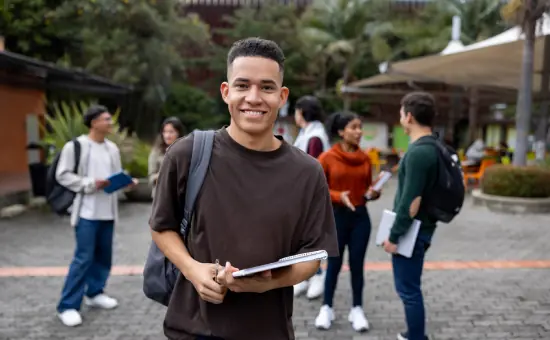
Discover how blended learning combines in-person quality with digital flexibility, creating the ideal study routine for modern students.
Blended learning is a smart alternative for students who need academic quality, flexibility, and meaningful interaction without depending entirely on one single learning format. By combining in-person classes with virtual activities, this model creates a more adaptable experience for students who want structure, autonomy, and better control over their study routines.
In higher education, this approach is especially relevant because students increasingly balance academic goals with work, family responsibilities, and digital habits. Research on hybrid education in Peruvian universities highlights that successful implementation requires digital competencies, institutional support, and clear strategies for modern academic environments.
What is blended learning in education?
Blended learning is an educational model that combines face-to-face teaching with online activities, allowing students to benefit from direct classroom interaction and digital resources. This format is widely used by online universities, institutions with distance university degrees, and programs designed for students who need flexibility without losing academic structure.
- It combines physical and virtual learning spaces. Students attend selected in-person sessions while completing online activities, which creates a balanced rhythm between guided interaction and independent study.
- It promotes autonomy with academic support. Learners manage part of their progress through virtual platforms, while teachers continue guiding discussions, evaluations, and learning objectives.
- It integrates technology into academic training. Platforms, videos, forums, and digital assessments become part of the learning process, helping students develop academic and technological skills together.
- It responds to different student lifestyles. The model supports people who work, commute, or manage personal responsibilities, making higher education more compatible with real routines.
- It supports practical and personalized learning. Students can review resources, prepare before class, and use in-person sessions to clarify doubts, apply knowledge, and collaborate with classmates.
How hybrid learning works
Hybrid learning works through a planned combination of scheduled face-to-face sessions and digital academic activities, rather than simply adding online tasks to a traditional course. Studies on hybrid education in Peru emphasize that successful implementation depends on teacher preparation, student support, and the effective use of digital tools.
- Online activities prepare students before class. Learners can review materials, watch videos, complete readings, or answer exercises before attending in-person sessions with a better context.
- In-person sessions strengthen interaction and application. Classroom time can focus on discussion, practice, questions, collaborative projects, and activities that require direct guidance from professors.
- Digital platforms organize the learning process. Assignments, evaluations, resources, and communication channels remain centralized, helping students manage deadlines and follow academic progress.
Differences between traditional and blended learning
Traditional learning usually depends on face-to-face instruction as the main learning space, while blended learning distributes the educational experience between classroom activities and virtual professional career resources. This learning format helps students use classroom time more strategically because part of the preparation, review, and reinforcement happens through digital platforms.
- Traditional learning depends more on fixed schedules. Students typically attend classes at specific times and places, which can be challenging for those with work or family responsibilities.
- Blended learning offers more control over the study rhythm. Students can complete certain activities online, review resources when needed, and use classroom time for deeper interaction.
- The teacher’s role becomes more strategic. Professors guide, accompany, and evaluate learning while using digital tools to reinforce content beyond the classroom.
Benefits of blended learning in modern education
Blended learning offers a practical response to contemporary academic needs because it connects flexibility, teacher guidance, digital access, and active participation. Research published in PLOS ONE found that blended learning can positively influence academic motivation and learning outcomes when supported by effective teaching practices.
Flexibility in the learning process
- More control over study time
- Better balance between academic and personal responsibilities
- Access to learning materials beyond classroom hours
Personalized and adaptive learning
- Resources that students can review at their own pace
- Greater opportunities to reinforce difficult topics
- Learning paths that combine autonomy and teacher support
Technology tools used in blended learning
Technology gives blended learning the structure it needs to remain organized, continuous, and measurable throughout the academic process. In this model, learning technologies are not accessories because they organize content, support communication, and help students build stronger academic habits.
- Learning management systems centralize academic work. Platforms help students access materials, submit assignments, review grades, and follow course activities from one organized digital space.
- Communication tools improve interaction outside class. Forums, chats, video calls, and announcements allow students and professors to maintain academic contact between face-to-face sessions.
- Digital assessments provide timely feedback. Quizzes, rubrics, and online tasks help students identify progress, correct mistakes, and prepare better for evaluations.
Impact on academic performance
Blended learning can improve academic performance when it is well designed, because students receive multiple opportunities to interact with content before, during, and after class. The PLOS ONE study on blended and traditional instruction found that blended learning was associated with academic motivation and learning outcomes, especially when teachers used strong instructional practices.
This impact is also relevant for students interested in blended university degrees and online professional careers. The model helps develop autonomy, digital competence, and responsibility, which are increasingly useful in academic and professional environments.
- Better preparation before class
- Stronger academic motivation
- More consistent engagement with course content
Blended learning brings together the strengths of in-person education and digital learning in one flexible academic model. It supports students who need structure but also value autonomy, access to resources, and a study experience that adapts better to modern life.
For institutions such as César Vallejo University, this model reflects the evolution of higher education toward flexible, technology-supported, and student-centered learning. Whether students are considering distance university degrees or blended university degrees, this format offers a practical path for building academic skills with greater adaptability.