
Vice-Chancellor for Research
César Vallejo University promotes research among faculty and students with the aim of generating knowledge and developing technologies and innovation.
Vice Chancellor for Research
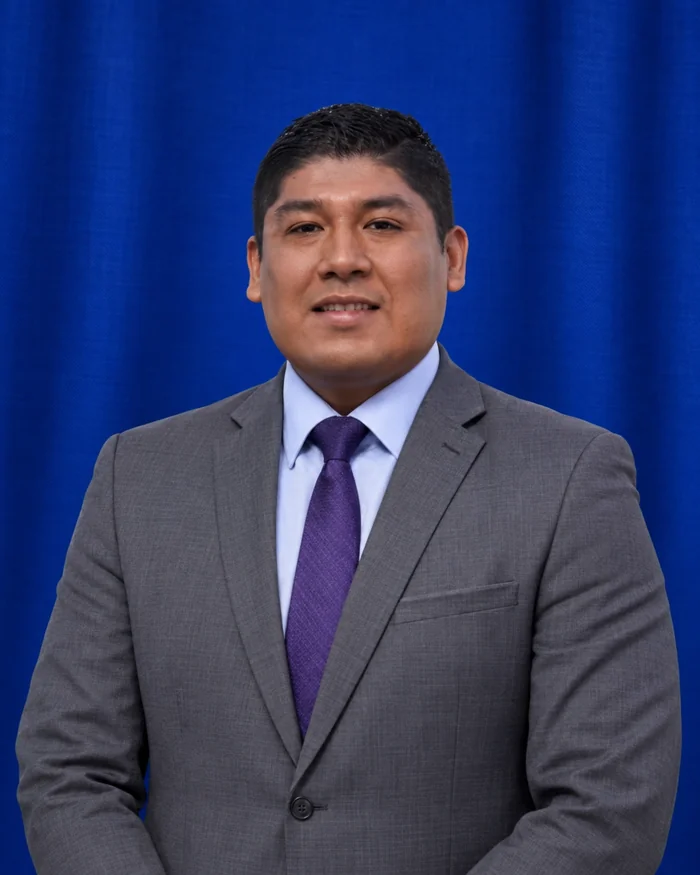
Dr. Marvin Moreno Medina
César Vallejo University promotes research among faculty and students to generate knowledge, develop technologies, and foster innovation, always aimed at addressing society's needs and strengthening national and international research networks.
Publishing Division
The Publishing Fund is the organizational unit responsible for promoting, advising on, publishing, and disseminating the intellectual output of César Vallejo University (UCV). It will be attached to the Center for Scientific and Cultural Dissemination, which is responsible for outreach and dissemination policies.
Original manuscripts may be submitted for publication by UCV faculty, researchers, students, alumni, and administrative staff; third parties affiliated with other universities, institutes, or institutions involved in scientific, academic, and cultural activities; and individuals engaged in research who are not necessarily affiliated with an institution, in that order of priority.
The Publishing Fund may issue internal and external calls for submissions for the publication of scientific works, such as research findings, research projects funded through competitive grants, and compilations of chapters for the creation of a monograph.
Publications Information
Faculty Researchers
Faculty researchers at César Vallejo University are the source of knowledge shared with our academic community and society at large; for this reason, the University promotes and encourages their activities, as well as the dissemination of their research projects.
The University encourages faculty research by strengthening their academic expertise in statistical methods, methodology, and the design and execution of research projects.
Our faculty researchers are affiliated with the University’s various academic units and are engaged in different lines of research, in accordance with the policies, objectives, and research regulations of our institution.
Research Projects
César Vallejo University’s commitment to research is reflected in the projects carried out by its faculty and students. For this reason, the University consistently encourages, supports, and disseminates their research, thereby enhancing our understanding of reality and providing society with the necessary resources to improve the quality of life for its citizens.
In addition, all students at the University submit research reports or theses upon completing their higher education studies and to earn their degree.
Forms of Support
The University supports the completion of research projects through various resources:
CENTER FOR FORMATIVE RESEARCH AND SCIENTIFIC INTEGRITY (CIFIC)
The Center for Formative Research and Scientific Integrity (CIFIC) is the operational unit responsible for planning, coordinating, executing, supervising, and evaluating academic-curricular activities within the research area leading to degree conferral and professional licensing across all levels and modalities. Additionally, it is tasked with promoting and ensuring a culture of scientific integrity across the University.
It validates, verifies, and ensures that research projects submitted for degrees and licenses adhere to the Code of Research Ethics. It also manages, updates, and maintains the institutional repository.
Furthermore, it administers and develops a Degree Conferral Program for bachelor's degree holders and graduates.
Learn More:
- Office of Scientific Integrity and Institutional Repository:
Focuses primarily on the management, preservation, visibility, and open access of scientific output and degree-qualifying research within the Institutional Repository. It also works to strengthen scientific integrity through regulations, training, and the preventive, self-regulated use of anti-plagiarism software to analyze and prevent potential instances of plagiarism. Key responsibilities include monitoring academic programs and verifying compliance with the Code of Research Ethics in degree-qualifying research projects.
- Office of the Degree Conferral and Research Program:
Oversees the management and administration of the Degree Conferral and Research Program as well as capstone research curricular experiences, ensuring their proper planning, implementation, and tracking across all academic levels and modalities. Responsibilities include coordinating teaching loads, syllabi, and schedules; monitoring faculty performance; and managing records of research deliverables and degree-qualifying projects in the Trilce academic platform. It also leads ongoing faculty professional development, proposes regulatory improvements to optimize research management, and tracks performance indicators to evaluate program outcomes.
CENTER FOR RESEARCH, DEVELOPMENT, INNOVATION, AND TECHNOLOGY TRANSFER (CIDITT)
CIDITT is responsible for promoting and managing research, technological development, innovation, intellectual property, and technology transfer at the University, connecting its outcomes with industry and society.
It manages funding and tracking for research projects, as well as the registry of researchers and intellectual property, through the Office of Research and Technological Development Projects and the Office of the Technology and Innovation Support Center (TISC / CATI). Both areas work together to strengthen the pathway connecting research with technology transfer—from project inception and tracking to the identification and protection of intellectual property assets, facilitating their subsequent commercialization and transfer to society and the productive sector.
Learn More:
- Office of Research and Technological Development Projects:
Operating under CIDITT, its purpose is to manage, monitor, and supervise internally funded research and technological development projects. It tracks project execution and results, maintains updated records of projects and their derivative scientific output, and coordinates actions with Research Directorates across the main and regional campuses.
- Office of the Technology and Innovation Support Center (TISC / CATI):
Operating under CIDITT, its purpose is to promote and strengthen intellectual property management across the University. It provides guidance and support to faculty, students, and researchers in identifying and protecting research results through patents, utility models, and software registrations, while liaising with INDECOPI for project tracking and administrative procedures.
CENTER FOR SCIENTIFIC AND CULTURAL DISSEMINATION (CEDICC)
CEDICC is responsible for implementing policies regarding the production, publication, and dissemination of the University's intellectual work. Its objective is to produce, manage, and disseminate knowledge in research, science, art, and culture. Through its publications—books and academic journals—CEDICC aims to enrich academic and cultural dialogue with society, serving as a benchmark of excellence in knowledge dissemination.
Learn More:
- Editorial House / University Press:
Affiliated with CEDICC, this organizational unit is responsible for promoting, advising, publishing, and disseminating intellectual, academic, cultural, and artistic works produced at the University. Its purpose is to guarantee quality, relevance, and alignment with the University's institutional mission.
- UCV Journals:
Affiliated with CEDICC, UCV Journals aim to consolidate the presence and global reach of César Vallejo University's scientific output within international scholarly communities, information systems, directories, databases, and specialized indexing services. They promote the dissemination of research findings and academic exchange under strict standards of editorial quality, scientific rigor, ethics, and research integrity.
RESEARCH INSTITUTES AND CENTERS (IyCI)
The Research Institutes and Centers are comprised of consolidated research groups, primarily led by researchers certified by CONCYTEC. Their purpose is to generate new knowledge, develop research and innovation projects, solve societal challenges through technology transfer, train new researchers, and foster collaboration through research networks, thereby contributing to regional and national development with a meaningful social impact.
Learn More:
- UCV Renacyt Researchers:
Members of the university community recognized by CONCYTEC as qualified researchers based on their academic credentials, scientific production, research experience, and active participation in scholarly endeavors.
- Research Group:
The fundamental organizational unit for scientific research, technological development, and innovation (R&D&i) activities. Groups are formed to conduct research and innovation aligned with one or more research lines.
- Research Networks:
Strategic alliances connecting researchers and institutions to promote collaborative work, maximize capacity, and generate knowledge with scientific and social impact.
- Research Lines:
Specialized thematic areas that guide and align the activities, projects, and scientific output of researchers toward addressing specific problems and challenges.
- CRIS (Current Research Information System):
An integrated research information platform that manages data on the University's research activities, providing centralized information regarding researchers, projects, publications, outputs, and scientific production.
- Technology Development and Research Centers:
Units dedicated to specialized scientific research across the main and regional campuses. Composed of consolidated research groups, they respond to the specific societal challenges of their surrounding regions and campus environments.
Related News

How Information Centers Support Academic Success in a University
Learn more
Advantages of Studying a University Degree in Trujillo
Learn more
How an Employability Program Boosts Your Job Placement?
Learn more
Ordinary Admission Exam: What to Evaluate and How to Prepare
Learn more
Why Studying Theology at UCV Makes a Difference
Learn more