

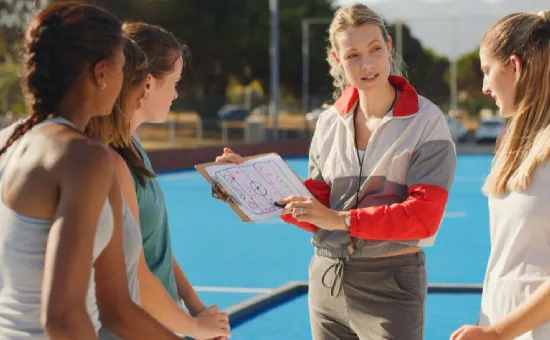
Coaching and Sports Management: Tools for Competitive Leadership
Learn how combining sports coaching and strategic management connects human talent with administration to build winning teams.
Sports organizations need more than technical knowledge to achieve consistent results. Behind every competitive team, academy, club, or federation, there are people capable of coordinating talent, defining objectives, managing resources, and making strategic decisions.
For those interested in combining sport with organizational development, sports coaching and management provide a pathway that connects human skills with administration and competitive strategy. Specialized education can prepare graduates to guide teams while understanding the operational demands surrounding athletic activity.
What Is Sports Coaching and Management?
Sports coaching focuses on guiding athletes and teams through communication, motivation, goal setting, and continuous development, while management addresses the organizational decisions required to keep sports initiatives functioning effectively. Together, these disciplines connect the human side of competition with administrative processes involving budgets, personnel, facilities, events, and institutional objectives.
This combination is particularly relevant for those exploring a specialization program after completing a bachelor's in sports science or another related field. Rather than treating coaching and administration as separate responsibilities, advanced education helps participants understand how both areas contribute differently to sustainable sporting projects.
- Coaching develops the human dimension of sport: coaches identify individual strengths, areas for improvement, motivations, and competitive objectives before defining strategies that encourage athletes to progress within a structured team dynamic.
- Management provides organizational direction: sports managers coordinate budgets, schedules, infrastructure, personnel, logistics, and institutional processes so athletic programs can operate according to clearly established objectives and available resources.
- Both disciplines require informed decision-making: leaders must interpret changing situations, communicate expectations clearly, and choose appropriate actions without relying exclusively on intuition, particularly when working with multidisciplinary teams or complex sporting organizations.
The Importance of Leadership in Sports Teams
Leadership directly influences how athletes understand responsibilities, respond to pressure, communicate with teammates, and maintain commitment throughout different competitive stages. Effective direction, therefore, requires more than authority, because coaches and managers must create conditions where individual capabilities contribute coherently to collective objectives.
- Communication creates alignment: clear instructions help athletes understand objectives, responsibilities, tactical adjustments, and expectations, while active listening provides leaders valuable information about difficulties that may affect group coordination or individual development.
- Emotional intelligence strengthens team dynamics: recognizing frustration, stress, motivation, and interpersonal tensions allows sports leaders to respond appropriately without compromising discipline, helping build healthier relationships during demanding training and competition periods.
- Conflict management protects collective progress: differences between athletes, technical staff, administrators, or other stakeholders require mediation skills that address disagreements constructively while preserving respect, accountability, and the team’s ability to continue working effectively.
These capabilities explain why many candidates researching universities with sports science programs also consider postgraduate education that incorporates organizational behavior and team direction alongside technical sports knowledge.
Essential Skills for a Sports Manager
A sports manager operates where athletic objectives meet organizational realities, making coordination, financial awareness, negotiation, and strategic organization essential competencies. Their decisions can impact everything from staffing and facilities to event logistics, partnerships, institutional projects, and the long-term viability of sports initiatives.
Advanced training can strengthen these abilities through case analysis, simulations, project development, and decision-making exercises based on realistic situations. This applied perspective is particularly valuable when an online course or specialized program connects academic concepts with challenges commonly found across the sports sector.
- Strategic organization: Managers need to translate institutional objectives into concrete actions, establish priorities, distribute responsibilities, coordinate schedules, and anticipate operational needs before they become obstacles for athletes or organizations.
- Financial and resource management: Understanding budgets, sponsorship arrangements, infrastructure requirements, and personnel requirements enables leaders to allocate available resources responsibly while protecting the operational continuity of sporting initiatives.
- Negotiation and stakeholder coordination: Clubs, academies, federations, sponsors, athletes, families, suppliers, and technical teams may have different interests, requiring managers to build agreements without losing sight of institutional priorities.
Career Opportunities in the Sports Industry
The sports industry offers career paths that extend beyond coaching athletes directly, particularly for graduates who understand both organizational processes and team development. Specialized preparation can support roles in administration, coordination, consulting, training projects, events, academies, and institutional sports programs.
- Clubs and competitive organizations: Graduates may participate in administrative coordination, team operations, project supervision, athlete development initiatives, or institutional programs that require knowledge of both sport and organizational management.
- Federations and sports associations: These organizations require people capable of coordinating competitions, development programs, technical initiatives, administrative procedures, stakeholder relationships, and projects involving different disciplines or geographic regions.
- Academies and training centers: Professionals can contribute to educational and athletic programs by coordinating staff, structuring development processes, organizing services, and ensuring that sporting objectives remain connected with sustainable operations.
Your Next Step Toward Sports Leadership Starts Here
Choosing advanced education should begin by identifying the type of responsibility you want to assume across the sports sector, because directing athletes requires different competencies from managing an academy, coordinating institutional programs, or overseeing sporting projects. Comparing curricula, methodology, learning format, faculty experience, and practical activities can help determine whether a program aligns with those objectives.
For people balancing education with existing responsibilities, distance learning can provide an alternative to exclusively campus-based study while maintaining structured academic development. Likewise, virtual specializations and other distance higher education programs can expand access to advanced preparation without requiring students to interrupt their professional activities.
Build Your Future in Sports Leadership with Specialized Training
Specialization becomes particularly valuable when academic knowledge is connected with realistic decisions involving people, institutions, and competitive objectives. According to Universidad César Vallejo's information about coaching and sports management, this type of education addresses competencies related to coaching, management, strategic direction, and organizational development.
- Training connected with real sporting challenges: Case studies and applied exercises can help participants examine situations involving team coordination, organizational decisions, institutional projects, and competitive demands from a structured academic perspective.
- Flexible learning supported by digital resources: Virtual education can facilitate access to specialized knowledge for participants who need to coordinate postgraduate studies with work, personal responsibilities, or activities related to the sports sector.
- Preparation for different organizational settings: The knowledge acquired can be transferred to clubs, federations, academies, training centers, sports projects, and other institutions where coordinated leadership and effective administration are essential.
This pathway can complement previous education, such as a bachelor's in sports science, particularly for graduates who want to expand their profile toward management responsibilities. Rather than remaining limited to one professional setting, specialized knowledge can support participation across different areas of the sports ecosystem.
Turn Your Preparation into Competitive Leadership
Sporting success is rarely the result of athletic talent alone, because sustainable organizations also depend on communication, coordination, financial responsibility, institutional direction, and people capable of responding intelligently to changing circumstances. Training in coaching and management brings these dimensions together while preparing graduates to approach sport from both human and organizational perspectives.
At César Vallejo University, specialized education can provide an opportunity to develop competencies applicable to clubs, academies, federations, and other sports organizations. For those ready to expand their professional profile, studying coaching and sports management can be a strategic next step toward taking greater responsibility within the sports sector.