DESIGN RESPONSIBLE RESOURCE MANAGEMENT STRATEGIES:
Utilize natural resources responsibly to preserve biodiversity and help mitigate the effects of climate change.


The Environmental Engineering Bachelor's Degree at UCV prepares you to design and manage solutions that protect ecosystems and promote sustainability. You will learn to combine scientific, technical, and regulatory knowledge to assess and mitigate environmental impacts, ensuring responsible development for communities and industries.
Modalities
In-person
Online





Among universities offering Environmental Engineering programs, UCV stands out for its comprehensive and hands-on approach. Here, you will benefit from:
This program is for you if:
Do you need help starting your university path?
DESIGN RESPONSIBLE RESOURCE MANAGEMENT STRATEGIES:
Utilize natural resources responsibly to preserve biodiversity and help mitigate the effects of climate change.
IMPLEMENT INTEGRATED MANAGEMENT SYSTEMS:
Reduce risks and environmental impacts associated with economic and social activities within organizations.
DEVELOP INNOVATIVE CLEAN TECHNOLOGIES:
Create environmentally friendly solutions that generate positive human impacts while supporting sustainable development.
WORK AS AN ENVIRONMENTAL PROJECT AUDITOR OR SPECIALIST IN:
- Environmental management companies
- Research and territorial planning institutions
- Industrial and natural resource sector companies
ALSO, AS AN INDEPENDIENT PROFESSIONAL:
- Environmental impact and sustainable development consultant
- Environmental management leader within public or private organizations
As an Environmental Engineering graduate, you can pursue opportunities in a wide range of sectors:
Environmental Management and Auditing
- Environmental auditor overseeing regulatory compliance projects for industrial and natural resource companies.
- Coordinator of integrated management systems and environmental policy initiatives in public or private organizations.
- Environmental impact assessment and remediation specialist within consulting firms.
Resource Monitoring and Treatment
- Project manager for water, soil, and solid waste management and treatment initiatives.
- Supervisor of environmental monitoring systems and biotechnological remediation projects.
- Consultant in ecological technologies aimed at reducing emissions and preserving biodiversity.
Research and Education
- Researcher at universities and research centers, developing innovative solutions in biotechnology and geospatial applications.
- Educator in environmental education programs and professional training initiatives.
To strengthen your professional profile, UCV offers elective courses aligned with industry demands and your interests:
- Environmental Biotechnology and Remediation
- Cartography and Geospatial Applications
- Integrated Management Systems and Environmental Policy
- Environmental Impact Assessment
- Water Management and Treatment
- Air Pollution Management and Control
Study in an environment designed to enhance your technical and scientific development through:
- Professional internships in environmental institutions and industry organizations: Gain real-world experience in compliance audits, remediation projects, and environmental management initiatives.
- RENACYT-certified faculty specialized in Environmental Engineering: Learn from experts actively engaged in research and innovative environmental practices.
- Immediate Degree System (STI): Graduate with your professional degree without administrative delays, accelerating your entry into the workforce.
- Technical Environmental English certification through Cambridge and Michigan: Prepare for participation in international projects and specialized environmental forums.
- More than 640 hours of English instruction and access to virtual simulation tools: Complement your laboratory experience with advanced language and technical training.

Gelacio Nelson Zarzosa Dueñas
Dean of the Faculty of Engineering and Architecture
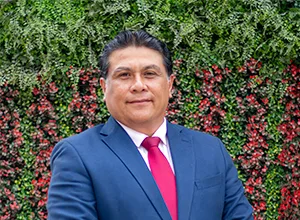
Eduardo Ronald Espinoza Farfán
Director de la Escuela de Ingeniería Ambiental